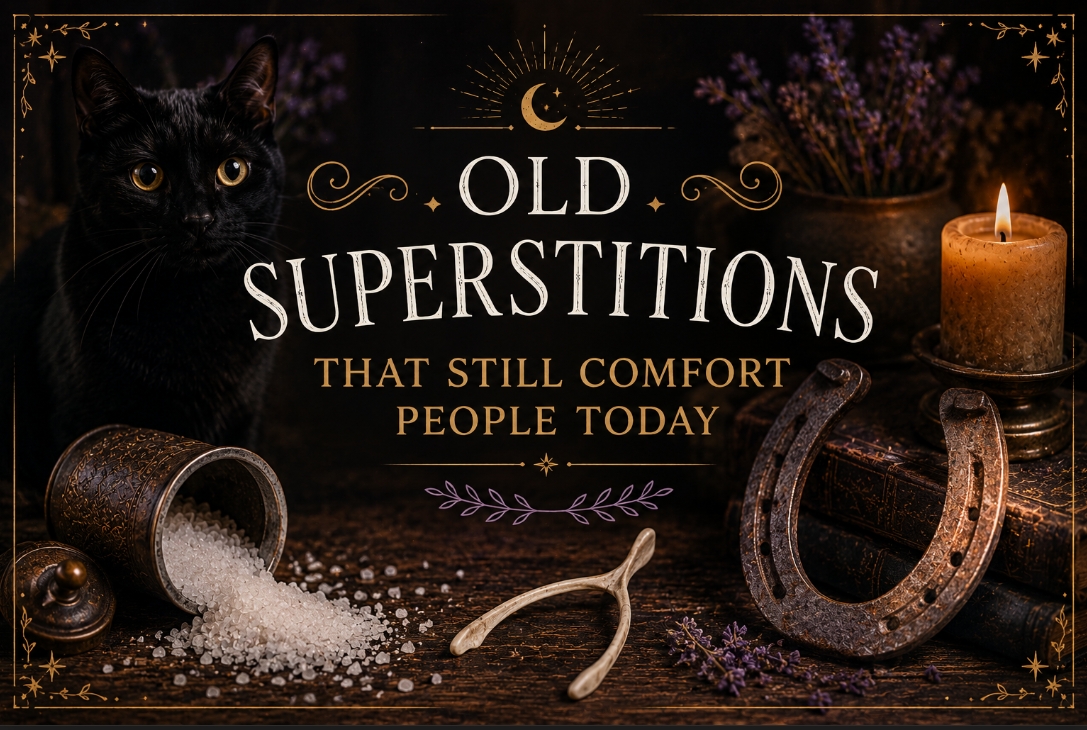
Old Superstitions That Still Comfort People Today
Long before self-help books, motivational podcasts, and endless social media advice, people turned to smaller things for comfort.
A pinch of salt tossed over the shoulder.
A wish made on the first evening star.
Knocking on wood after speaking too confidently about the future.
Keeping a lucky coin tucked away in a pocket or purse.
Superstitions have existed in nearly every culture throughout human history. Some were meant to protect against bad luck. Others invited blessings, prosperity, love, or safety. Many began in times when life felt uncertain and frightening, giving people small rituals that made the world feel a little less chaotic.
And even now, in the middle of modern life with smartphones and streaming services and grocery pickup apps, many of those old habits still remain.
Not because people are foolish.
Because human beings have always searched for comfort, meaning, and reassurance.
One of the oldest and most widespread superstitions involves throwing spilled salt over the left shoulder. In many traditions, salt was seen as protective and purifying. Spilling it was considered unlucky, and tossing a pinch behind you was believed to ward off negativity or bad fortune lurking nearby.
Even people who laugh while doing it often still do it anyway.
Just in case.
Knocking on wood is another superstition that has survived centuries. Historians believe it may trace back to ancient beliefs that spirits lived within trees. Touching wood after speaking of good fortune was thought to prevent jealousy from spirits or fate itself.
Today, people still instinctively rap their knuckles against a table after saying things like:
“I haven’t been sick all year.”
“My car has been running perfectly.”
“Things are finally calming down.”
It is part habit.
Part humor.
Part tiny prayer hidden inside ordinary conversation.
Wishing on stars also continues to comfort people in quiet ways. There is something deeply human about looking up into the night sky and attaching hope to a distant point of light. For centuries, people believed stars carried spiritual significance and that wishes spoken beneath them traveled farther into the unseen world.
Even now, adults who insist they “do not believe in that stuff” still sometimes pause when they see a shooting star.
And for one small moment, they hope.
Many superstitions center around protection of the home.
Horseshoes above doorways.
Brooms placed near entrances.
Salt across thresholds.
Protective herbs hanging in kitchens.
Keeping windows cracked during funerals so spirits could leave peacefully.
These traditions often blurred the line between spirituality, folklore, and practical comfort. A protected home felt safer emotionally as well as spiritually.
Some superstitions revolve around animals.
Black cats remain one of the most famous examples. Depending on the culture, they were seen either as omens of bad luck or symbols of protection and magic. Crows and ravens were associated with prophecy, wisdom, or messages from the spirit world. Crickets inside the home were sometimes considered signs of good fortune.
Birds at windows still unsettle many people today, especially after loss or during periods of emotional upheaval.
Then there are the deeply personal superstitions people create for themselves over time.
A “lucky” sweater worn during difficult situations.
A certain song that always seems to play before good news.
A necklace worn for comfort.
A routine repeated before traveling.
A candle lit during stressful times.
These small rituals become emotional anchors.
And perhaps that is why old superstitions endure even in modern times. Beneath the folklore and symbolism, many of them offer something people desperately need:
A sense of control.
A sense of connection.
A sense that the world may contain hidden meaning after all.
Superstitions also connect us to the generations that came before us.
A grandmother teaching a child never to open an umbrella indoors.
A parent quietly making the sign of the cross while driving through storms.
A family repeating the same New Year traditions decade after decade.
These small acts become threads stretching across time.
Not every superstition needs to be taken literally to hold value.
Sometimes the comfort itself is the magic.
Sometimes the ritual matters more than whether the universe truly keeps score of spilled salt and broken mirrors.
And in uncertain times especially, people often return instinctively to small comforting traditions that make life feel warmer, safer, and more connected.
A candle in the window.
A wish whispered into darkness.
A lucky charm tucked into a pocket.
Knuckles tapping softly against wood after speaking hope out loud.
Tiny rituals.
Tiny comforts.
Tiny ways human beings remind themselves that perhaps the world still holds a little mystery after all.
In Service,
Sister Bridget
spellmaker.com
Leave a Reply