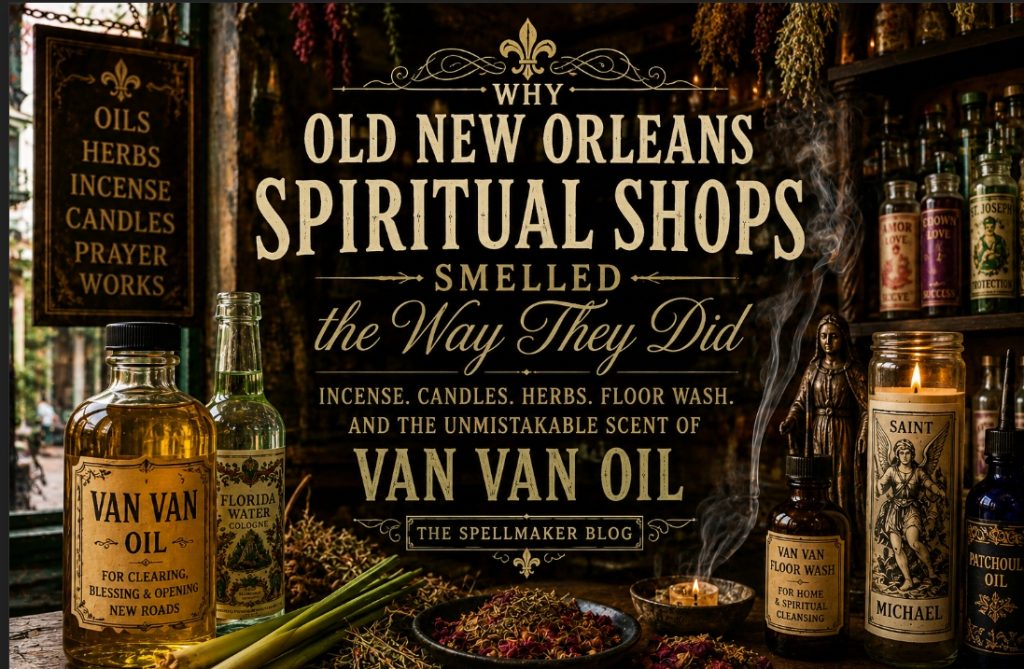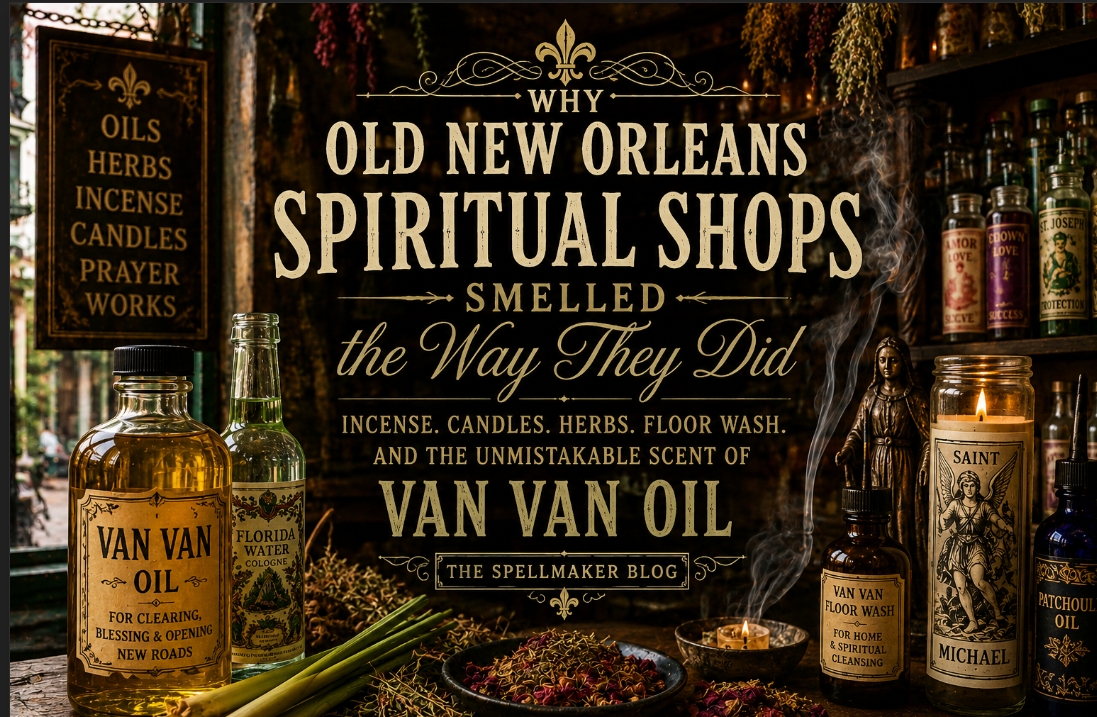
In the old spiritual shops of New Orleans, the scent hit you before anything else did.
Before you noticed the candles stacked floor to ceiling. Before you saw the jars of herbs, the shelves of oils, the prayer cards curling slightly at the edges, or the cat asleep beside the register. The smell arrived first, wrapping itself around you the moment the door opened.
It was impossible to mistake once you knew it.
Warm candle wax. Incense smoke. Old wood. Floor wash. Dried herbs. Florida Water. Dust from a hundred cardboard boxes. Faint tobacco. Perfume lingering in velvet curtains. Sometimes coffee brewing somewhere in the back. Sometimes rain drifting in through a cracked door from the New Orleans humidity outside.
And almost always, the bright lemony scent of Van Van oil moving through the air like sunlight.
For many people, Van Van oil became the smell of spiritual work itself.
Traditional Van Van formulas are usually built around lemongrass and citronella, often blended with other herbs and oils depending on the maker and family tradition. The scent is clean, sharp, green, and alive. It cuts through stale air immediately. In spiritual traditions throughout New Orleans and the South, Van Van is commonly associated with clearing negativity, opening roads, blessing new beginnings, and lifting heavy conditions.
In old spiritual shops, someone was almost always using it for something.
A worker dressing candles in the back room. A mop bucket prepared with a few drops added to the floor wash. Oils being blended behind the counter. A customer uncapping a bottle to smell it before buying. Sometimes it clung faintly to the hands of the shop owner after years of daily use.
The scent settled into the walls over time.
That layered atmosphere is part of what made those shops feel so different from ordinary stores. They did not smell manufactured or staged. They smelled lived in. Worked in. Prayed in.
The old wood floors absorbed decades of incense and oils. Herbs dried overhead from hooks and nails. Cardboard shipping boxes brought in dust from warehouses and ports. Glass bottles carried traces of rose, jasmine, patchouli, cinnamon, bay, and clove every time they were opened.
And then there were the candles.
Anyone who spent time in spiritual shops remembers the particular scent of warm wax and glass. Some candles carried heavy floral fragrances. Others smelled faintly medicinal or spicy from the oils being used to dress them. Burnt wick smoke mixed into everything, especially in shops where devotional lights stayed burning all day long.
That smell became comforting to many people. It meant someone was praying. Someone was working. Someone was trying to change their circumstances instead of surrendering to them.
In New Orleans especially, spiritual shops often reflected a blend of traditions rather than one rigid system. Catholic imagery stood beside African diasporic practices, folk remedies, lucky charms, roots, oils, incense, saints, and ancestor traditions. The scent of the shop reflected that blending too.
Rose incense might drift through the room while a bottle of Hoyt’s Cologne sat beside a statue of Saint Michael. Patchouli mingled with furniture polish and old books. Bay leaves and cinnamon bark rested in baskets near the counter. Somewhere, there was usually a faint trace of sulfur from incense or powders stored nearby.
Even the practical cleaning products became part of the spiritual atmosphere.
Many old Southern spiritual shops used strong floor washes with lemon, pine, camphor, or herbal blends. Cleanliness carried spiritual meaning. Washing the floors was not just housekeeping. It was often considered part of maintaining the energy of the space itself.
That combination of cleaning products, oils, herbs, and candle smoke created a scent profile you simply cannot recreate with one candle from a department store. It came from years of layering.
Years of prayers whispered over counters.
Years of herbs crushed between fingers.
Years of rainwater tracked in from New Orleans sidewalks.
Years of incense curling toward stained ceilings while customers quietly explained heartbreak, money troubles, court cases, illnesses, or impossible love affairs.
The shops themselves became memory keepers.
For many people, walking into one felt calming almost immediately, even if they could not explain why. The scent told your nervous system that this was a place where people came looking for hope. A place where candles were lit for the sick, the grieving, the lonely, and the desperate. A place where someone behind the counter might hand you a bottle of oil and say, “Baby, it’s going to be alright,” whether they fully knew your situation or not.
That atmosphere mattered.
Today, many modern metaphysical shops feel cleaner, brighter, and more polished. There is nothing wrong with that. But the old New Orleans spiritual shops carried a kind of beautiful clutter and warmth that is increasingly rare. They felt human. Imperfect. Alive.
And if you have ever walked into one of those old stores, truly old stores, you probably remember the smell even now.
The first spark of incense.
The warm wax.
The old wood.
And that unmistakable bright ribbon of Van Van oil cutting through the air like a blessing.
In Service,
Sister Bridget