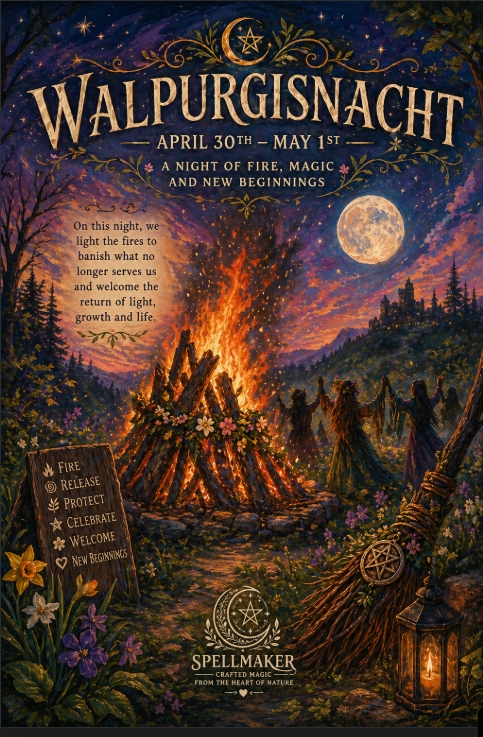
Walpurgisnacht arrives like a spark at the edge of night, that moment when winter finally loosens its grip and the world leans toward warmth again. Celebrated on the evening of April 30th into May 1st, it sits right on the threshold between seasons. Not quite spring, not quite summer. A doorway night.
Its roots reach back into old European traditions, especially in Germany and parts of Scandinavia, where people gathered on hilltops, lit great bonfires, and kept watch until dawn. The fires were not just for warmth or celebration. They were believed to drive away lingering spirits, clear out stagnant energy, and protect the land as it shifted into a new cycle of growth. There is something deeply human about that instinct. When the world changes, we light a fire and stand together.
The name itself comes from Saint Walpurga, a Christian abbess whose feast day falls on May 1st. Over time, her name became woven into older folk traditions, blending sacred and seasonal meanings together. But if you listen closely beneath the name, you can still hear the older rhythm. This is a night of crossing over. A night when the veil feels thin, not in a heavy or somber way, but in a lively, electric one. The kind of energy that hums just under your skin.
In folklore, Walpurgisnacht became known as a night when witches gathered. Not in the fearful, storybook sense meant to scare people into staying indoors, but in a much older sense. Women and wise folk meeting under open sky, marking the turning of the wheel, celebrating fertility, growth, and the return of life. The stories grew wilder over time, as they tend to, but underneath them is something familiar. Community. Firelight. Laughter carried on the wind.
There is a beautiful contrast in this night. It holds both protection and celebration. The bonfires were meant to banish what no longer belonged, while the gatherings welcomed what was coming in. It is both a clearing and a calling. A release and an invitation.
If you want to honor Walpurgisnacht in a simple, grounded way, it does not have to be elaborate. Step outside if you can, even for a few minutes. Notice the air. There is a certain softness to it, even in places where spring comes slowly. Light a candle or a small fire if it is safe to do so. Let it represent what you are ready to let go of. Old fears, old stories, anything that has overstayed its welcome.
Then, just as important, take a moment to call something in. Not in a grand, complicated way. Just a quiet intention. Growth. Stability. Peace. Opportunity. Whatever feels right for you in this season of your life.
Some people like to leave a small offering for the land or for spirit on this night. A bit of bread, a splash of milk, a handful of flowers. It does not have to be perfect. It is the gesture that matters. A way of saying, I see this moment. I am part of this turning.
Walpurgisnacht flows naturally into Beltane, which carries that same energy forward into full bloom. Where Walpurgisnacht is the spark, Beltane is the flame. Together, they mark one of the most alive points of the year.
There is something steadying about these old nights. They remind us that change is not sudden or chaotic. It comes in waves, in seasons, in cycles we can learn to recognize. Even when life feels uncertain, the wheel keeps turning.
Tonight, the fires burn. The air shifts. The world tilts toward light.
And somewhere, just beyond what we can see, something is waking up again.
Long before calendars told people when spring had arrived, they felt it. It came in the lengthening light, in the warming air, in the way the earth itself seemed to stretch and breathe again. By the time Beltane arrived, spring was no longer tentative. It was alive, visible, undeniable.
Beltane marks that turning point in the year when everything is in motion. Growth is no longer beginning. It is happening. Trees are leafed out, flowers are open, and the land itself feels full. It’s a celebration of life at its most active and visible, and people have always found ways to reflect that back in human form.
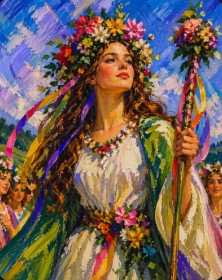
At the center of many of those celebrations was the May Queen. She was not a distant or royal figure in the modern sense. She was usually a young woman chosen from the community, someone who seemed to carry the brightness of the season naturally. There was something about her that reflected what was happening in the land itself. She became a living symbol of Beltane, representing the world in bloom.
On the morning of the celebration, she would be crowned with flowers. Hawthorn, primrose, bluebells, whatever was blooming locally would be woven into her hair or shaped into a crown. Her clothing was often light and simple, meant to echo the softness and color of the season rather than stand apart from it. She did not stand above the people. She moved among them, leading processions, dancing, or simply being present as the celebration unfolded.
Her role was not about status. It was about embodiment. The May Queen made the energy of Beltane visible. She represented the moment when life is no longer returning but has fully returned. Where earlier spring is fragile and uncertain, Beltane is confident. Open. Alive. She carried that energy so the whole community could see it, feel it, and celebrate it together.
In some traditions, she is paired with the Green Man, a figure representing the wild, growing force of nature. Where she is blossom and beauty, he is leaf and root. Together, they reflect the balance of growth that defines the season. But even on her own, the May Queen stands as a clear expression of what Beltane holds. She is not potential. She is fulfillment.
There is also something quieter and more meaningful in her story. The May Queen is not meant to hold her role forever. She belongs to a moment in the turning of the year. She is crowned when the season calls for her, and when that moment passes, she steps back into ordinary life. The crown is not something she keeps. It is something she carries for a time.
That is part of what makes her powerful. She represents those moments in life when everything feels open, alive, and possible. Times when you step forward, when you are seen, when something within you is fully expressed. And just as naturally, there are times when that energy recedes and changes into something quieter.
The May Queen does not cling to the season or try to hold it in place. She moves with it. She embodies it while it is here, and when it shifts, she lets it go.
In that way, her story is not just about spring or celebration. It is about recognizing when something is ready to bloom, stepping into it fully, and trusting that when the time comes, it will change into something else.
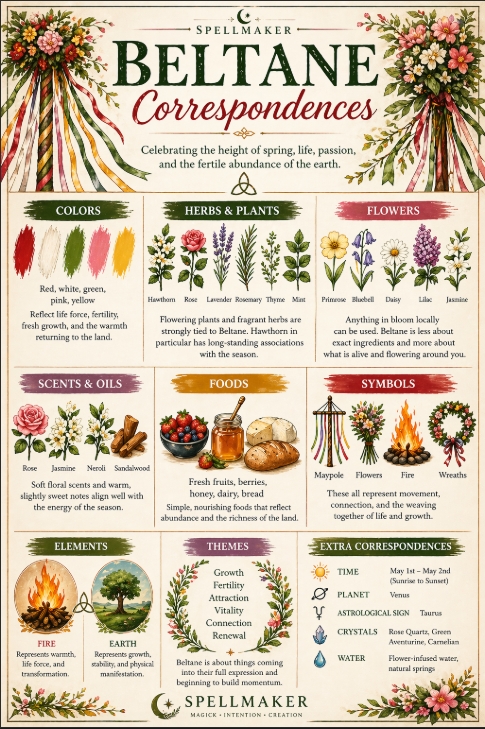
Beltane marks the height of spring, when life is no longer waking up but fully in motion. The energy of the season is warm, active, and outward-moving. It’s a time connected to growth, attraction, vitality, and the visible return of life in the natural world.
These correspondences give you a simple way to connect with that energy, whether you’re doing something intentional or just paying attention to the season around you.
Colors Red, white, green, pink, yellow These reflect life force, fertility, fresh growth, and warmth returning to the land.
Herbs and Plants Hawthorn, rose, lavender, rosemary, thyme, mint Flowering plants and fragrant herbs are strongly tied to Beltane. Hawthorn in particular has long-standing associations with the season.
Flowers Primrose, bluebell, daisy, lilac, jasmine Anything in bloom locally can be used. Beltane is less about exact ingredients and more about what is alive and flowering around you.
Scents and Oils Rose, jasmine, neroli, sandalwood Soft floral scents and warm, slightly sweet notes align well with the energy of the season.
Foods Fresh fruits, berries, honey, dairy, bread Simple, nourishing foods that reflect abundance and the richness of the land.
Symbols Maypole, flowers, ribbons, fire, wreaths These all represent movement, connection, and the weaving together of life and growth.
Elements Fire and Earth Fire represents warmth, life force, and transformation. Earth represents growth, stability, and physical manifestation.
Themes Growth, fertility, attraction, vitality, connection, renewal Beltane is about things coming into their full expression and beginning to build momentum.
You don’t need to use all of these.Even noticing one or two of them in your day is enough to connect with the season. A flower on the table, a window open to warm air, a candle lit in the evening. Beltane tends to meet you halfway.
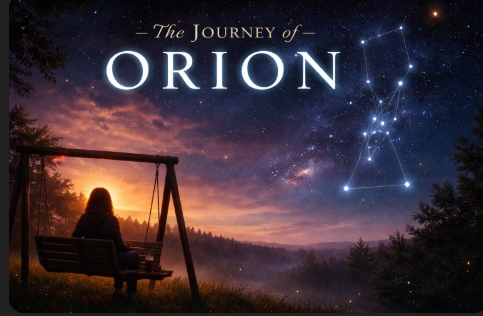
There’s a moment every year when you go outside, look up, and realize something is missing.
You don’t notice it right away. The sky still looks like the sky. There are still stars, still that familiar hush that settles in after sunset. But then it hits you.
Orion is gone.
If you’ve ever learned to recognize him — really recognize him — it feels strange. His three-star belt is so steady, so easy to find, that once you know it, you start to expect it. It becomes part of your sky. Part of your rhythm.
And then one night, he’s just… not there.
But here’s the thing. Orion doesn’t actually disappear.
He just moves on.
As the seasons shift, Orion drifts lower in the evening sky, setting earlier and earlier each night. By summer, he’s still above us, still whole, still exactly where he’s always been — but now he’s rising and setting with the Sun, hidden in the daylight where we can’t see him.
Nothing about him is broken. Nothing has been lost.
He’s simply stepped out of view.
And months later, if you’re paying attention, you’ll catch him again just before dawn. Quiet. Almost shy. That same familiar line of three stars rising in the early morning sky, like a memory returning.
By winter, he’s back where he belongs — standing tall, clear and unmistakable, as if he never left at all.
The sky teaches this lesson over and over, if we’re willing to watch it.
Not everything that leaves is gone. Not everything that disappears is lost.
Some things just move into a different part of the cycle, waiting for the right time to return.
So if there’s something in your life that feels like it’s slipped out of reach — a person, a feeling, a sense of direction — it might not be gone in the way it feels.
It may just be out of sight for now.
And like Orion, it may come back into view when the season shifts again.
Until then, the sky is still full. Still moving. Still holding more than we can see at once.
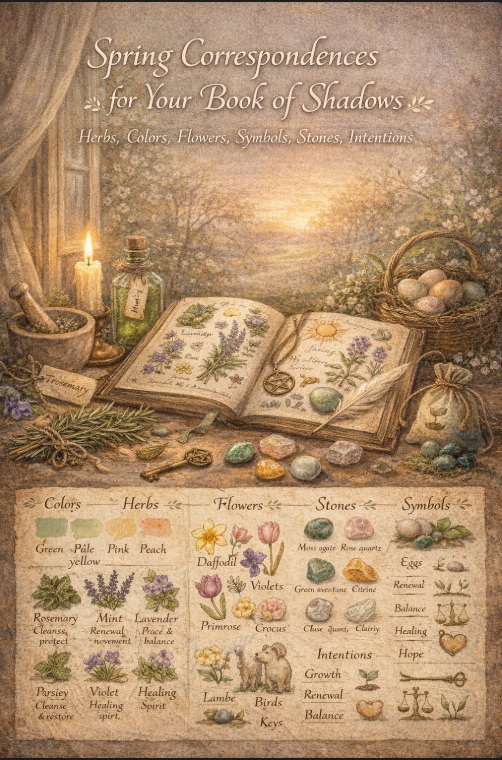
Spring Correspondences for Your Book of Shadows Herbs, colors, flowers, symbols, stones, and intentions for the season of renewal
Spring has a way of arriving in layers. First there is the shift in the light. Then the softening of the air. Then the first green things begin to appear, sometimes so quietly you almost miss them. It is a season of return, but not in a loud or hurried way. Spring does not burst in all at once. It wakes slowly, and in that slow waking there is a kind of magick all its own.
For many witches and spiritual practitioners, spring is a season of renewal, growth, fresh starts, balance, fertility, and hope. It is a beautiful time to refresh your altar, update your Book of Shadows, and gather the correspondences that feel true to this part of the year. Some of these are traditional, some are intuitive, and some may be deeply personal. That is part of the beauty of keeping a Book of Shadows in the first place. It becomes a living record of how the seasons speak to you.
Below is a simple but meaningful collection of spring correspondences you can use in your own practice, journaling, altar work, spellcraft, seasonal decorating, or quiet reflection.
The energy of spring
Before getting into the lists, it helps to pause and name the feeling of the season.
Spring carries the energy of:
awakening
renewal
fresh starts
fertility
hope
growth
balance
healing
movement
possibility
This is not quite the full abundance of summer. Spring is the first stirring. The first sign of life returning. The first little yes after a long no.
If winter is the inward season, spring is the season of emergence.
Spring colors
Color correspondences can be used in candles, altar cloths, ribbons, flowers, clothing, journal pages, spell bags, and seasonal decorations. Spring colors often reflect both the soft return of life and the brighter promise of what is to come.
Some traditional and intuitive spring colors include:
Green Growth, fertility, healing, abundance, renewal, new life
Gold The returning sun, vitality, blessing, sacred illumination
You do not need to use all of these. Even one or two colors can be enough to shift the feeling of a space and align your work with the season.
Spring herbs
Spring herbs tend to carry cleansing, protective, healing, and awakening qualities. Some are culinary, some are magickal, and many are both. Herbs can be used fresh or dried depending on your preference and availability.
Rosemary A wonderful herb for cleansing, remembrance, clarity, protection, and mental freshness. Rosemary is excellent in spring washes, bundles, altar bowls, and simple home blessings.
Mint Fresh energy, prosperity, movement, renewal, cooling, and clearing stagnant conditions. Mint feels like spring in herb form.
Lavender Peace, rest, beauty, emotional healing, gentle spiritual work, balance. Lavender is lovely for softening the nervous system after winter heaviness.
Thyme Courage, purification, vitality, strength, and resilience. Thyme has an old-world feel that sits beautifully in spring correspondences.
Basil Luck, abundance, prosperity, blessing, love, and freshness. Basil is one of those herbs that brings a lively, clean energy.
Parsley Renewal, cleansing, purification, protection, and health. Simple, common, and underrated.
Lemon balm Joy, ease, emotional soothing, uplift, restoration. Beautiful for spring after a difficult winter season.
Nettle Protection, strength, vitality, and healing. Nettle carries a wilder edge and reminds us that spring is not only delicate. It is powerful too.
Dill Luck, prosperity, protection, and growth. Dill carries a bright, living energy.
Sage Wisdom, purification, blessing, and spiritual clearing. If you use sage in your practice, spring is a natural time to work with it intentionally.
You might also choose herbs based on what is growing near you. Local plants often make the strongest seasonal allies.
Spring flowers
Flowers are one of the most obvious symbols of spring, but they also carry distinct energies. They can be placed on an altar, pressed into journals, woven into seasonal wreaths, offered to spirits, or simply enjoyed as living reminders of the season.
Daffodil Hope, rebirth, cheerful energy, return of life, confidence
Rose Love, beauty, blessing, sensuality, and spiritual devotion. Roses can belong to many seasons, but soft pink or white roses can fit beautifully into spring work.
Even if you do not have access to fresh flowers, images, pressed petals, or simple floral sketches in your Book of Shadows can hold the same feeling.
Spring stones and crystals
Crystals for spring often support growth, emotional clarity, healing, new beginnings, and balance. Choose the ones that feel alive in your hand. Spring is a tactile season. It wants to be felt.
Moss agate Growth, new beginnings, earth connection, stability, abundance. One of the best spring stones.
Green aventurine Luck, opportunity, prosperity, optimism, expansion
Rose quartz Self-love, tenderness, heart healing, emotional renewal
You do not need a large crystal collection to work seasonally. One stone placed on your altar, carried in your pocket, or tucked into a journal can be enough.
Spring symbols
Symbols are often the fastest way to create a seasonal feeling in your Book of Shadows. They can be drawn, painted, collaged, stitched, or simply noted as anchors for later use.
Some common spring symbols include:
eggs
nests
seeds
buds
sprouts
hares or rabbits
lambs
birds
feathers
bees
butterflies
Not every spring symbol has to be sweet or decorative. Spring is also mud, wind, unpredictability, cold mornings, and hard little shoots pushing through frozen ground. That belongs to the season too.
Spring intentions
One of the most useful parts of a seasonal correspondences page is the intentions section. This tells you what kind of work the season naturally supports.
Spring intentions may include:
renewal
balance
healing
hope
fertility
growth
new beginnings
prosperity
fresh energy
emotional clearing
inspiration
confidence
This is a very good season for spells and rituals around:
starting over
finding your footing again
clearing out old heaviness
blessing a new home or project
planting prosperity
encouraging love and beauty
supporting healing and hope
inviting life back into a stagnant situation
It is also a season for simple personal promises. Not grand vows. Just the kind that help you move with the light.
Ways to use these correspondences
Once you gather your spring correspondences, you can put them to work in simple, beautiful ways.
You might:
create a dedicated spring page in your Book of Shadows
make a seasonal altar with one flower, one herb, one stone, and one candle
choose a spring color palette for journaling or decorating
build a small charm bag for renewal or growth
write a spring prayer using the symbols that speak to you
refresh your home with herbs and open windows
press spring flowers into your journal
create a list of what you want to grow this season
pair a spring stone with a seasonal intention and carry it with you
This does not have to be complicated to be meaningful.
A gentle note on personal correspondences
One of the most important things to remember is that correspondences are guides, not rules.
If spring feels pale gold to one person and stormy silver to another, both can be true. If violets mean comfort to you because of a childhood memory, that matters. If rosemary always reminds you of your grandmother’s kitchen, that matters too. A living spiritual practice makes room for that kind of truth.
Your Book of Shadows should not just be a record of what other people say spring means. It should also become a record of what spring means to you.
What herbs do you reach for when the weather changes? What colors feel like return? What flowers stop you in your tracks? What kind of hope begins to stir in you when the light comes back?
Those are correspondences too.
Closing thoughts
Spring is a season of becoming. Not fully arrived, not fully formed, not yet in bloom, but moving unmistakably in that direction. There is something deeply sacred about that stage. The tenderness of it. The uncertainty of it. The quiet determination of it.
When you add spring correspondences to your Book of Shadows, you are doing more than making a list. You are creating a doorway into the season. A way to remember what this time of year feels like in your body, your home, your spirit, and your practice.
Use what speaks to you. Keep what feels alive. Let the season meet you where you are.
The earth does not rush into bloom, and neither do you need to.
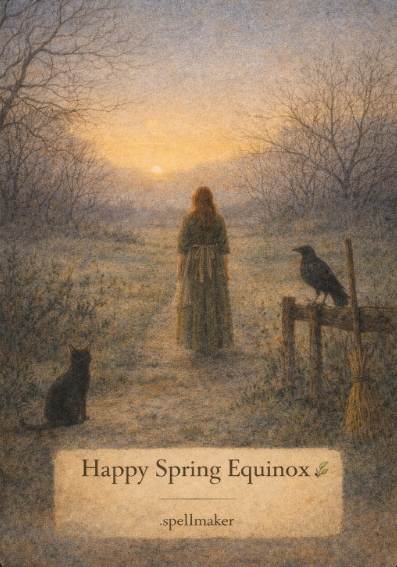
The Spring Equinox arrives without fanfare, but you feel it.
Not in the loud way of holidays or the dramatic sweep of a full moon, but in something softer. The light lingers just a little longer in the evening. The air shifts. The world feels like it’s taking a slow, steady breath after a long winter.
This is the moment of balance.
Day and night stand equal, neither one holding more power than the other. It’s a rare kind of still point in the year—a quiet pause where things aren’t pushing forward or pulling back, just… resting in between. And there’s something deeply comforting about that.
We spend so much time trying to move ahead, to fix things, to grow faster, to figure it all out. The equinox reminds us that there is value in standing still for a moment and simply noticing where we are.
What has changed?
What has softened?
What is ready to begin again?
Early spring doesn’t come in full bloom. It comes in hints. A little green pushing through the soil. Trees that are still bare but no longer feel lifeless. The faint warmth of the sun that feels almost unfamiliar on your skin.
It’s subtle, but it’s undeniable.
And that’s how real change often works too.
Not in grand, sweeping transformations, but in small shifts that you might miss if you aren’t paying attention. A thought that feels a little lighter. A situation that doesn’t weigh on you the way it used to. A quiet sense that something is opening, even if you can’t fully see it yet.
The Spring Equinox is not about sudden blooming. It’s about awakening.
It’s about the moment when the earth begins to stir again, when life starts to return—not loudly, but steadily. There’s a patience to it. A knowing that growth doesn’t need to be rushed.
This is a beautiful time to check in with yourself in a gentle, honest way.
Not with pressure. Not with a list of things you think you should be doing.
Just a quiet question:
What feels ready?
Maybe it’s something small. A habit you’ve been meaning to return to. A space in your home that wants clearing. A creative idea that has been sitting quietly in the background, waiting for your attention.
Maybe it’s something deeper. A part of yourself that you’ve been protecting or putting off, now asking to be seen again.
You don’t have to do everything at once. The earth isn’t rushing, and neither do you need to.
Even the act of clearing space—physically or emotionally—is part of the work of the equinox. Opening a window. Letting in fresh air. Wiping down a table. Making room for something new without forcing it to arrive.
There’s power in that.
In many traditions, the Spring Equinox is associated with renewal, fertility, and the return of life. But underneath all of that is something simpler and more personal: the permission to begin again.
Not because you failed. Not because you’re behind.
But because the timing is right.
The balance of light and dark also asks us to look at ourselves with a little more honesty. Both sides are present. The parts of us that are growing, and the parts that still feel heavy or uncertain.
And that’s okay.
You don’t need to be “all light” to move forward. You just need to be willing to stand in that balance and keep going.
There’s a quiet kind of strength in that kind of acceptance.
As the day and night stand equal, you’re invited to find your own center point. To notice what feels steady, what feels aligned, what feels like truth underneath all the noise.
From there, growth becomes a little easier. A little more natural.
You don’t have to force it.
You just have to allow it.
The energy of the equinox isn’t loud or demanding. It doesn’t push you into action. Instead, it gently opens the door and lets the light in, a little at a time.
And sometimes, that’s exactly what we need.
So as this season turns, take a moment to pause and notice the shift—both around you and within you.
One thing I love about this time of year is that it is so full of fun and interesting lore! And Krampus lore just happens to make my German ancestors very happy!
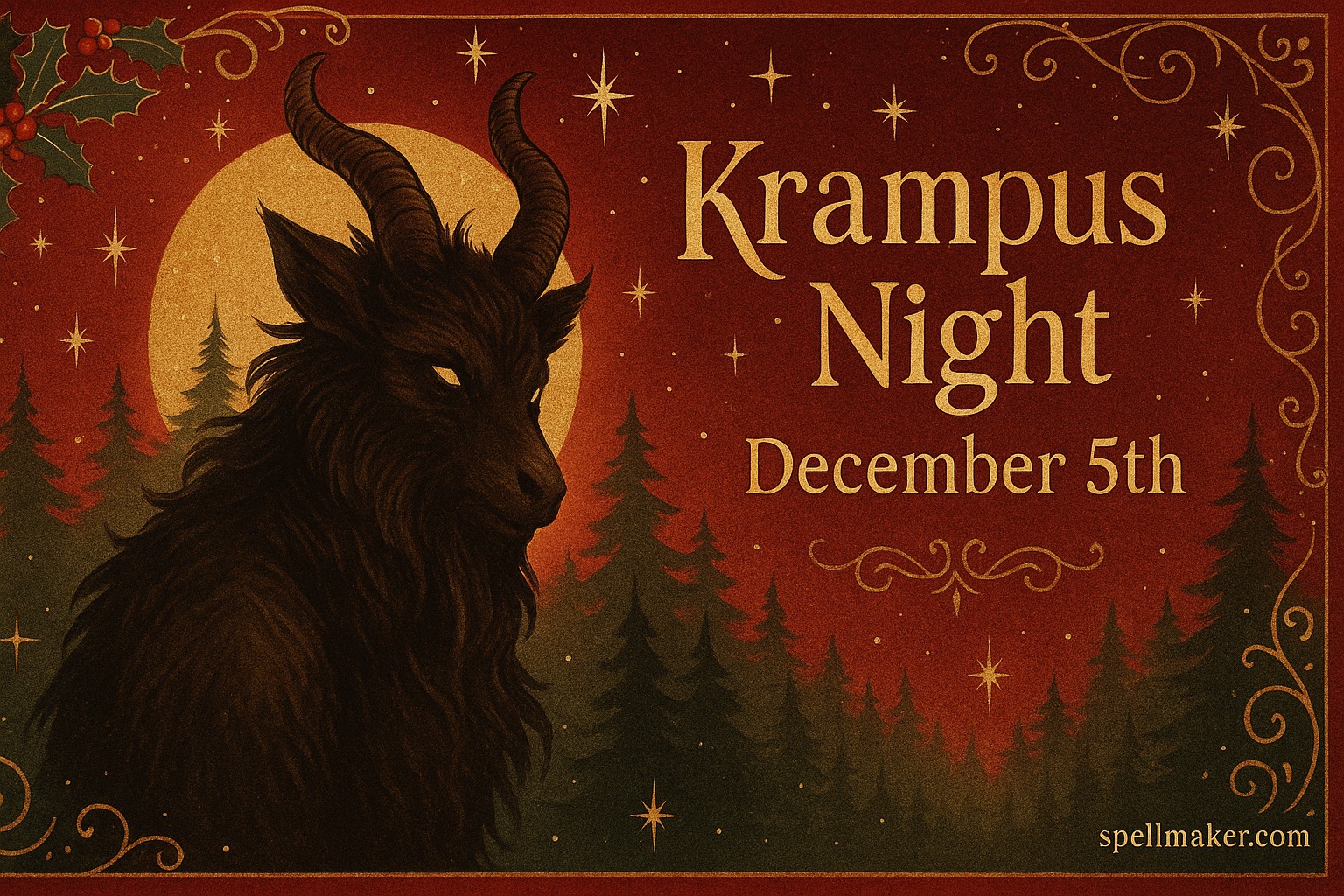
Krampus Night arrives on December 5th, the eve of St. Nicholas Day, and with it comes one of winter’s most fascinating old-world spirits. In Alpine folklore, Krampus is the horned, wild, winter creature who travels ahead of St. Nicholas — not as an enemy, but as his necessary counterpart.
Where St. Nicholas rewards goodness, Krampus handles the rest.
In the oldest stories, the two travel together from house to house. St. Nicholas brings gifts, blessings, and encouragement. Krampus comes first, rattling his chains, ringing bells, and sweeping through the house to clear away mischief, bad behavior, and energies that don’t belong. He is the “shadow” of the season — not evil, but the one who enforces boundaries so the blessings of St. Nick have a clean path forward.
Krampus’s role in the legend is simple:
He removes what must go, so the gifts of the season can arrive.
This is why he comes on December 5th, while St. Nicholas comes on December 6th. Krampus prepares the way. He is the winter’s broom, making sure negativity is handled before goodness enters the home.
In some traditions, Krampus carried a switch or birch branch — not to harm, but as a symbol of discipline, transformation, and clearing. He also carried a basket on his back to “take away” the worst behaviors or energies of the previous year. In modern spiritual terms, he is the spirit of banishment, boundaries, and necessary removal.
When we look at him through a magical lens, Krampus becomes incredibly useful:
• Clearing away stagnant or harmful energy • Banishing what oversteps your boundaries • Removing energy-drainers and chaos • Breaking patterns you no longer wish to repeat • Preparing the home for winter blessings and protection
Krampus energy pairs perfectly with the early December season: the time when darkness is deepest, and we begin to consciously sweep out what has piled up emotionally, mentally, and spiritually.
A simple Krampus Night ritual:
Write down something you refuse to carry into the new year — a habit, a fear, a toxic connection, or even a feeling that’s overstayed its welcome. Fold the paper away from you three times. Say: “Krampus, keeper of winter’s truth, Take this burden from my path.” Then burn it safely or toss it away outside.
Krampus isn’t a monster. He’s the reminder that every blessing has a shield, every light has a shadow, and every home deserves to be protected before the gifts of the season arrive.
Sit back and enjoy a brief ride through the history and uses of a witch's broom!
History of the Witch's Besom
The association of besoms with witchcraft can be traced back to the early modern period. This time was marked by the peak of witch persecution, where besoms were often depicted as tools used by witches to fly through the air to sabbats (gatherings of witches). Despite these dramatic depictions, besoms were commonly used for everyday cleaning in many cultures. This dual use in both mundane and magical contexts has led to the enduring association of besoms with witches and magic.
Traditional and Modern Ritual Uses
Cleansing and Purification: Besoms have traditionally been used to sweep away negative energy and protect homes from evil spirits. They are used in rituals to purify and consecrate sacred spaces, symbolically sweeping away psychic dirt and stagnant vibes.
Creating Sacred Space: They are often employed to mark the boundaries of a sacred or ritual space. This use symbolizes the clearing and consecration of the area for spiritual or magical activities.
Protection: Besoms are placed over doorways or thresholds as a protective measure against negative energies or unwanted influences.
Astral Travel and Meditation: In some magical traditions, besoms serve as tools for astral travel or meditation, symbolizing the broomstick used for flying.
Sabbat Celebrations: In Wiccan and Pagan traditions, besoms are used during sabbat celebrations, such as jumping over a besom during Beltane as a symbol of fertility and union.
Decoration and Craft: Besoms are also popular as decorative items in magical or witchy spaces, often adorned with symbolic elements like ribbons or charms.
How to Make a Besom
Creating your own besom is a rewarding process that allows for personalization and connection with the tool. Traditional materials include birch twigs for the bristles and willow or hazel branches for the handle. These materials are chosen for their durability and symbolic meanings. Making a besom involves gathering these materials, binding the twigs together, attaching them to the handle, and adding personal touches like decorations or blessings.
Symbolism and Beliefs
Besoms are deeply symbolic, carrying various meanings across different cultures. For instance, jumping over a broom is a tradition in some cultures to signify marital union or to welcome prosperity. Besoms are also linked to folklore, such as the belief that if a broomstick falls, company is coming, or hiding brooms on certain nights to prevent them from being stolen by other witches.
The witch's besom is a fascinating subject, combining practical uses, deep symbolism, and a rich history that spans centuries and various cultures. Its enduring presence in modern witchcraft and pagan practices speaks to its powerful symbolism and versatility as a magical tool.
What witch does not love purple! We know we do!!! This practical, high-quality Tote Bag is available in three sizes. Great for the farmer's market, out in town, or a night under the full moon harvesting herbs! Makes a great gift!. Made from reliable materials, lasting for seasons. Image printed on both sides. Only available here! :-)